11 days
Darjeeling · Gangtok · Hills
Adventure, Culture, Mountains — from Delhi's Mughal history to the monasteries, high passes and turquoise lakes of Ladakh.
Ladakh sits at the meeting point of Indian and Tibetan Buddhist civilisation, a high-altitude desert where monasteries perch on impossible cliffs and prayer flags mark some of the highest motorable passes on Earth. This 15-day itinerary devotes real time to Ladakh rather than rushing through it — visiting Leh's cluster of ancient gompas, crossing Khardung La into the dune-filled Nubra Valley, and reaching the otherworldly blue of Pangong Lake, two-thirds of which lies across the border in Tibet. Bookended by Delhi's Mughal and colonial landmarks, it is a journey that captures both the cultural depth and the sheer physical drama of the Indian Himalayas.
Arrive early morning in the Indian capital. Begin your exploration of Delhi, a city of contrasts — blending Mughal history, colonial charm, and modern energy. Visit Old Delhi's bustling lanes, ride a rickshaw through its colorful bazaars, and discover the majestic Jama Masjid, one of India's largest mosques. In New Delhi, explore the India Gate, Connaught Place, and the towering Qutub Minar. End your day with a peaceful visit to the Bangla Sahib Gurudwara, where volunteers prepare meals for thousands daily. Dinner and overnight stay in Delhi.
Early morning flight to Leh, the capital of Ladakh, located at an altitude of 3,500 meters. Spend the morning resting at the hotel to acclimatize to the altitude. In the afternoon, visit the serene Sankar Monastery adorned with intricate frescoes. Return to Leh by walking through scenic paths lined with fields and traditional houses. Dinner and overnight stay at the hotel.
Begin the day with a visit to the Tiksey Monastery, famous for its vibrant frescoes and impressive Maitreya Buddha statue. Continue to the Hemis Monastery, the largest and most important in Ladakh, renowned for its annual festival. End the day with a visit to the Shey Palace, once home to the kings of Ladakh until the 16th century. Dinner and overnight stay at the hotel.
Visit the Spituk Monastery, an important center of the Yellow Hat sect, perched high above the Indus Valley. Continue to the Phyang Monastery, noted for its artistic treasures, ancient statues, and thangkas. Later, explore the Stok Palace, residence of the royal family, and admire the collection of Ladakhi jewelry and sacred thangkas. Free time in the old town before returning to your hotel for dinner and overnight stay.
Drive along a magnificent road following the Indus River. Stop at the Basgo Monastery, known for its 17th-century frescoes, then continue to Likir Monastery, home to remarkable paintings and a giant Maitreya statue. Lunch at the Ule Tokpo camp, followed by a visit to the Alchi Monastery, famous for its ancient murals and unique architecture. Overnight stay in camp.
Travel through winding mountain roads to reach Lamayuru Monastery, dramatically located at 3,800 meters in a lunar-like landscape. Founded in the 11th century, it is one of Ladakh's oldest gompas. Continue toward the remote Dha and Hanu villages, home to the Drokpa people — a unique ethnic community believed to be descendants of Alexander the Great's soldiers. Overnight stay in camp.
Spend the morning exploring more Drokpa villages, gaining insight into their distinct customs and attire, unlike anywhere else in Ladakh. Continue your scenic drive back to Leh. Dinner and overnight stay at the hotel.
Drive to the Nubra Valley via the world's highest motorable pass — Khardung La (5,600 m). Enjoy panoramic views of the Indus Valley and the snow-clad Karakoram range. Descend into the "Valley of Flowers" where the air is filled with tranquility. Overnight stay in camp.
Begin the day with an optional camel ride on Bactrian camels, once used on the ancient Silk Route. Then, take a scenic hike to the Samstanling Monastery (3 hours). Later, visit the 16th-century Diskit Monastery, offering a stunning panoramic view of the valley. Dinner and overnight stay in camp.
Drive back to Leh, stopping en route at the Shanti Stupa, perched high above the city at 4,267 meters. The view over Leh and the surrounding peaks is truly spectacular. Dinner and overnight stay at the hotel.
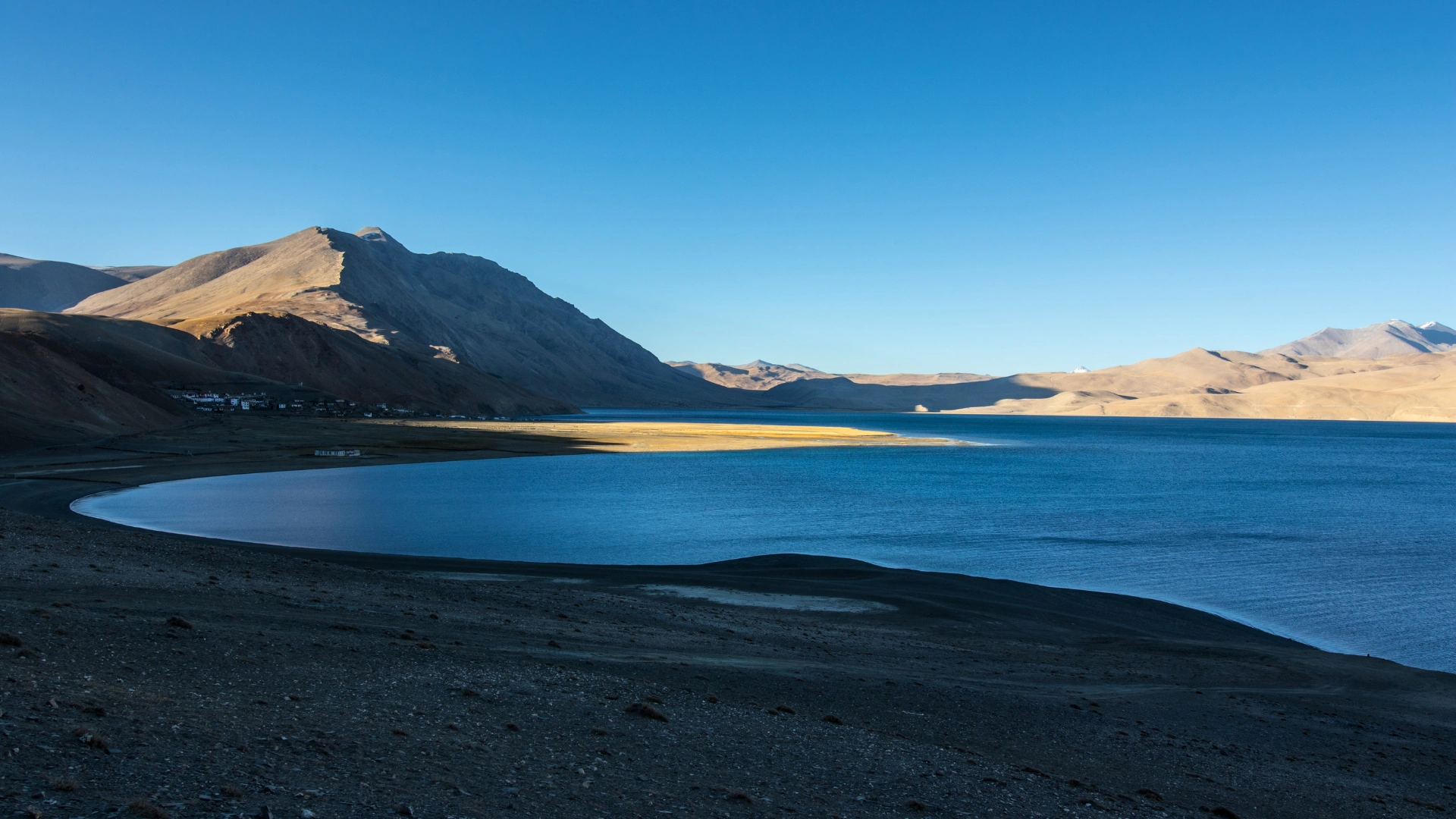
Depart for Pangong Lake via the Changla Pass (5,486 m), the third highest motorable pass in the world. On the way, visit Thaktok Monastery, the only monastery in Ladakh representing the Nyingmapa order. Arrive at Pangong Lake and admire its dazzling shades of blue surrounded by the Changchenmo mountain range. Overnight stay in camp.
Spend the day exploring Pangong Lake, a natural wonder stretching over 130 km, two-thirds of which lies in Tibet. The lake's ever-changing hues, from turquoise to deep blue, create a breathtaking sight. Take a walk through nearby villages and interact with the locals. Overnight stay in camp.
Return to Leh in the morning. In the afternoon, visit the local market for traditional crafts and souvenirs. Optional visit to the Women's Alliance of Ladakh, an NGO that empowers local women through skill development and sustainability projects. Dinner and overnight stay at the hotel.
Take an early morning flight to Delhi. Upon arrival, enjoy a peaceful stroll through Lodi Garden, one of the city's most beautiful parks dotted with tombs from the 15th and 16th centuries. Visit the magnificent Akshardham Temple, dedicated to Swaminarayan, a masterpiece of modern Indian architecture and spirituality. In the evening, attend a sound and light show (temple closed on Mondays). Dinner and overnight stay in Delhi.
After breakfast, transfer to the airport for your return flight. End of your extraordinary Himalayan adventure filled with cultural encounters, spiritual experiences, and awe-inspiring landscapes.
Leh sits over 3,500 metres above sea level, and the rapid ascent by air carries a genuine risk of altitude sickness, so a rest day before strenuous sightseeing is a standard and essential precaution.
Ladakh's tourist season runs roughly from May to September, when mountain passes to Nubra Valley and Pangong Lake are open and accessible; the region is snowbound and largely inaccessible by road in winter.
This itinerary includes two nights near Pangong Lake, allowing a full day to see the lake's colours shift from dawn to dusk rather than a rushed day trip.
No prior experience is required, but travelers with heart or respiratory conditions should consult a doctor before undertaking high-altitude travel above 3,500 metres.
Nubra Valley is known for its cold desert sand dunes, double-humped Bactrian camel rides, and monasteries such as Diskit, reached via one of the world's highest motorable passes.