Golden Triangle Tour Itinerary: 5 Days Delhi, Agra & Jaipur
The best Golden Triangle tour itinerary covers Delhi, Agra and Jaipur in five days: one day in Delhi, the Taj Mahal and Agra Fort, a stop at Fatehpur Sikri, a full day in Jaipur, then back to Delhi. The loop is about 720 km, and November brings sunny days of roughly 27 to 30°C.
Golden Triangle tour itinerary quick facts
Why the Golden Triangle is India’s classic first trip
The Golden Triangle links three of northern India’s most visited cities in a compact loop. In a single week you can move from the monuments of the capital to the white marble of the Taj Mahal and the palaces of Rajasthan, without long flights or complicated logistics.
It works well because each city feels different. Delhi layers Mughal and colonial history over a busy modern capital, Agra centres on a Mughal masterpiece, and Jaipur introduces the colour, craft and royal heritage of Rajasthan.
History behind the three cities
Delhi has served as a capital for centuries. The Mughals built the Red Fort and Jama Masjid in the seventeenth century, while the British later planned New Delhi with its wide ceremonial avenues.
Agra rose to prominence under the Mughal emperors. Akbar raised the great fort there, and his grandson Shah Jahan commissioned the Taj Mahal as a mausoleum for his wife Mumtaz Mahal, a monument widely dated to the mid seventeenth century.
Jaipur is younger. It was founded in 1727 by Maharaja Sawai Jai Singh II as a planned city, and its pink-washed walls and gridded streets still reflect that design.
Golden Triangle tour itinerary: day by day
Day 1: Arrive in Delhi
Keep the first day light. Explore Old Delhi’s lanes and Jama Masjid, then drive past India Gate and the broad boulevards of New Delhi. Humayun’s Tomb and Qutub Minar are good additions if your flight lands early.
Day 2: Delhi to Agra
Drive to Agra, roughly 230 km and about three to four hours, usually on the expressway. Visit Agra Fort in the afternoon, then see the Taj Mahal from across the river at sunset if you plan a sunrise visit tomorrow.
Day 3: Taj Mahal, Fatehpur Sikri and on to Jaipur
See the Taj Mahal at sunrise for softer light and fewer crowds, then have breakfast and leave for Jaipur. Stop at Fatehpur Sikri, Akbar’s deserted red sandstone capital, on the way. The drive is long, often around five hours with the stop.
Day 4: Jaipur
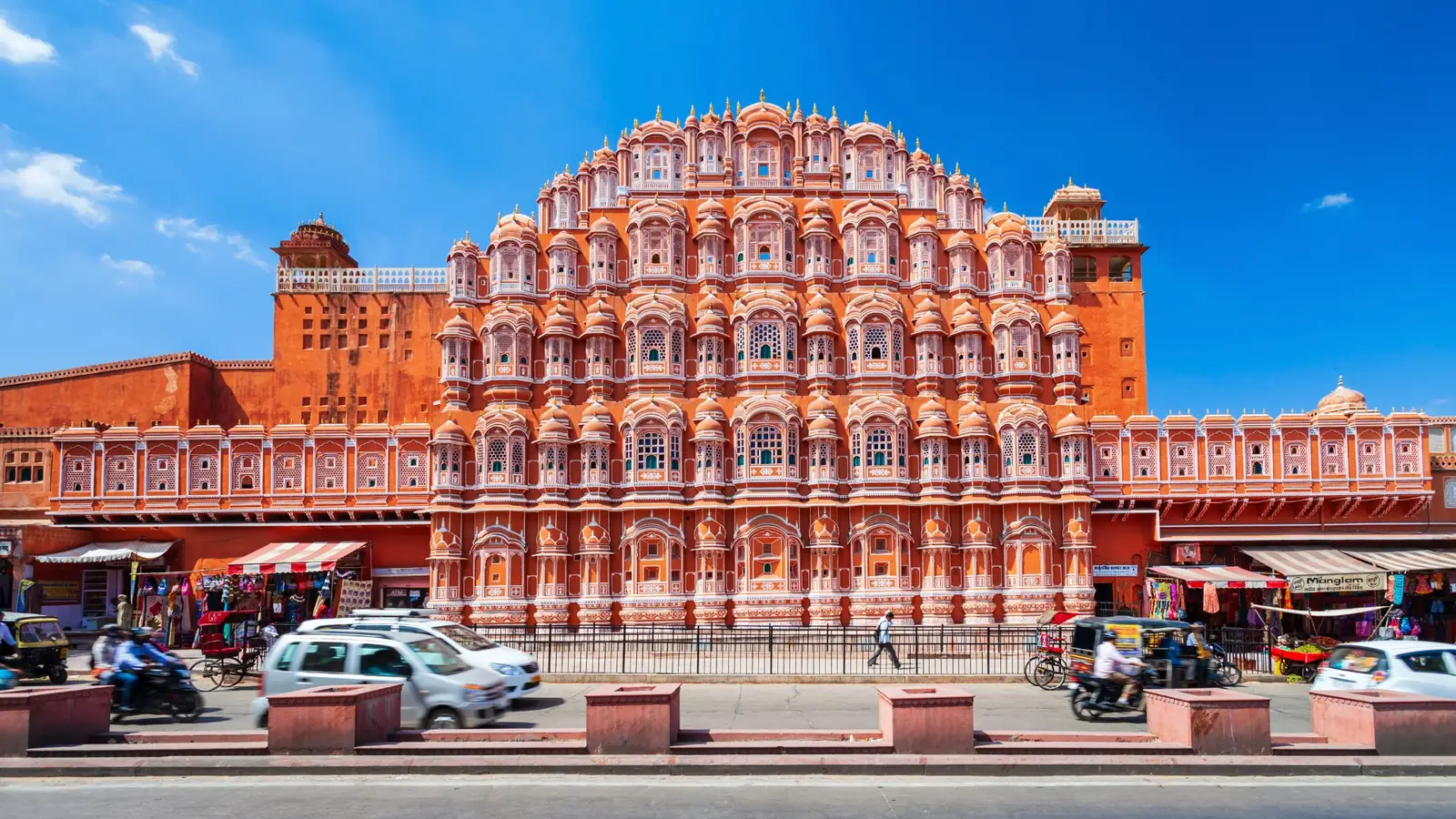
Start at Amber Fort, then visit the City Palace, Jantar Mantar and the Hawa Mahal. Spend the late afternoon in Johari Bazaar for jewellery, block-printed textiles and Rajasthani crafts.
Day 5: Jaipur to Delhi
Drive back to Delhi, roughly 280 km and about five to six hours, in time for onward flights. Consider adding a buffer night if your departure is early.
Times and distances are approximate and vary with traffic, so our drivers build in comfortable margins.
Best time for a Golden Triangle tour: month by month
October to early March is the sweet spot. Temperatures below are approximate monthly averages for Agra, and Delhi and Jaipur are broadly similar.
| Month | Average temp. | What to expect |
|---|---|---|
| January | 14°C | Cool, foggy mornings; clear afternoons |
| February | 18°C | Mild and bright; excellent for sightseeing |
| March | 24°C | Warming up; spring light |
| April | 30°C | Hot afternoons; fewer visitors |
| May–June | 34°C | Very hot; best avoided |
| July–September | 30–31°C | Humid monsoon showers; green and quiet |
| October | 26°C | Warm days, cooling evenings; festival season |
| November | 21°C | Sunny, dry days; cool evenings |
| December | 16°C | Cold mornings, haze possible; peak season |
Our advice: choose November or February for the best balance of weather, clear skies and manageable crowds.
Golden Triangle weather in November: temperature and packing
November is one of the most comfortable months for the Golden Triangle. Days are sunny and dry, typically about 27 to 30°C in Delhi, Agra and Jaipur, while nights and early mornings fall to roughly 13 to 15°C. Rainfall is very low.
Pack light cotton layers for daytime, a fleece or shawl for sunrise at the Taj Mahal, comfortable walking shoes, sunglasses and a scarf. Dress modestly for temples and mosques, with shoulders and knees covered. Delhi can be hazy in late autumn, so a light mask is useful for sensitive travellers.
Highlights you should not miss
In Delhi, prioritise the Red Fort, Humayun’s Tomb and a walk through Chandni Chowk. In Agra, the Taj Mahal and Agra Fort are the essentials, with Fatehpur Sikri as the best en-route stop.
In Jaipur, Amber Fort, the City Palace and the Hawa Mahal anchor a full day, and Jal Mahal makes an easy photo stop. Optional extras include Abhaneri Stepwell or a rickshaw ride in Old Delhi.
Culture, food and responsible travel
Try Delhi’s kebabs and parathas, Agra’s petha sweets and Jaipur’s dal baati churma, choosing busy, freshly cooked venues if you have a sensitive stomach.
Bargain politely, ask before photographing people, and carry small notes for tips. Choosing locally owned hotels and guides keeps more of your spending in the communities you visit.
How to plan your Golden Triangle trip with Tour En Inde
Most international visitors arrive in Delhi and leave from Delhi, which makes the loop convenient. The roads are good, but journeys are slow near cities, so a private air-conditioned car with an experienced driver is the most relaxed option.
Our 5-day Golden Triangle tour includes hotels, transfers and expert guides, and you can extend it with the Rajasthan Complete Tour or the Royal Heritage of Rajasthan. Book early for December and January, when the best hotels fill up.
Golden Triangle tour itinerary: frequently asked questions
What is the best Golden Triangle tour itinerary for 5 days?
A classic 5-day Golden Triangle tour itinerary spends one day in Delhi, travels to Agra for the Taj Mahal and Agra Fort, stops at Fatehpur Sikri on the way to Jaipur, spends a full day in Jaipur, and returns to Delhi. It suits first-time visitors who have limited time.
How far is the Golden Triangle circuit?
The full Delhi, Agra, Jaipur and Delhi loop is roughly 720 km by road. Each leg usually takes about three to five hours depending on traffic, so a private car with a driver keeps the days comfortable.
What is the best time to do the Golden Triangle tour?
October to early March is the best window. November to February is the most popular, with clear skies and pleasant days, although mornings in Delhi and Agra can be foggy. April to June is very hot and best avoided.
What is the weather like on the Golden Triangle in November?
Expect sunny, dry days of roughly 27 to 30°C and cooler evenings of about 13 to 15°C across Delhi, Agra and Jaipur. Rain is very unlikely, but bring a light jacket for mornings and after sunset.
Is 5 days enough for the Golden Triangle?
Five days covers the main highlights at a steady pace. If you want slower mornings, a sunrise Taj visit with a rest afternoon, or extra stops such as Abhaneri Stepwell, add a sixth or seventh day as a buffer.
Which day should I visit the Taj Mahal?
Check the current opening days before you finalise the plan, because the monument has a weekly closing day and tickets are best booked in advance in peak season. Sunrise is usually quieter and gives softer light for photographs.
Plan your Golden Triangle tour with local experts
Tell us your dates and interests and we will build a private itinerary with the right hotels, guides and transfers. Free quote within 24 hours, no obligation.